Most people arrive on the Kinabatangan hoping for orang-utans and elephants. A smaller number arrive hoping for a large, dark, red-billed stork that almost nobody outside birding has heard of, and they are the ones who leave happiest when it turns up — because they know how few there are.
What it is
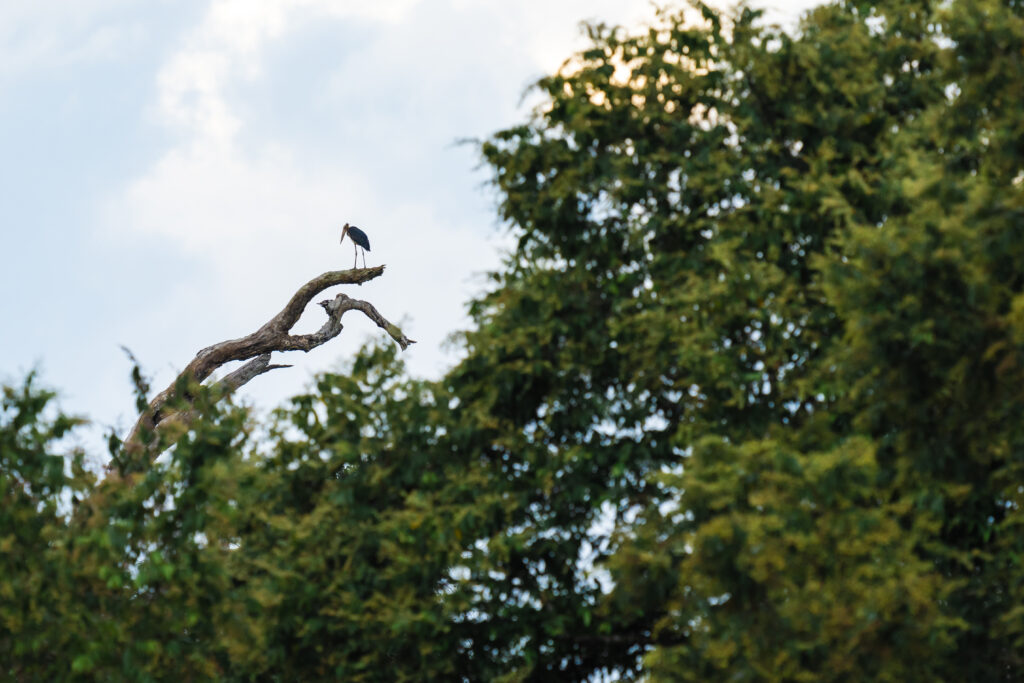
Ciconia stormi is a big stork — around 80cm tall — with a black body, white belly and neck-sides, a heavy red bill, and a bare face of orange and yellow skin. In flight the underwing is black. Perched at the edge of a forest river in dappled light it can vanish surprisingly well for something that size, which is part of why the population went unnoticed for so long.
It is a bird of lowland forest rivers and swamps — not open wetland, not paddy. It wants tall trees to nest in and quiet, shaded water to fish. That combination is exactly what has been cleared across most of its range.
Why the number matters
Storm’s stork is listed as Endangered by the IUCN, with a global population estimated in the low hundreds — some estimates put it under 500 mature birds across Sumatra, Borneo and a sliver of the Malay Peninsula. On paper it is one of the rarest storks in the world.
Within that, Sabah — and the lower Kinabatangan specifically — is one of the most reliable places left to see it. Not common. Reliable, for a bird this scarce, means that a birder who spends three mornings on the river has a real chance.
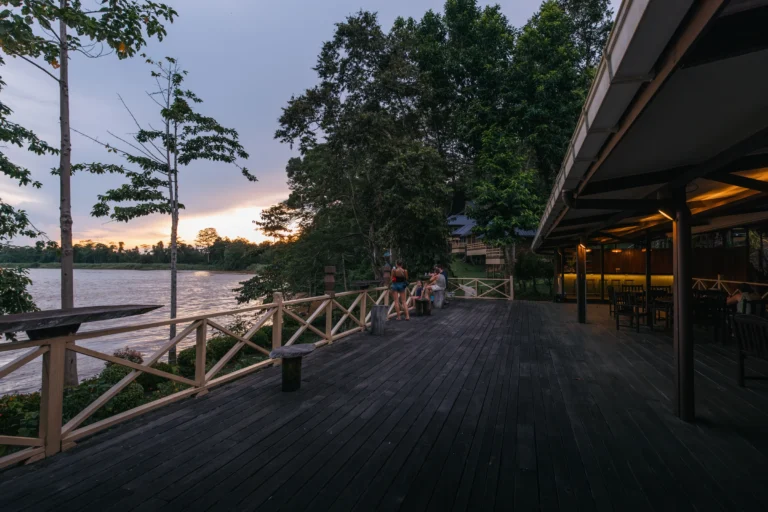
It is on the Hornbill Lodge checklist, and commonly sought after by visiting birders.
How to look for it
- Dawn, from the boat. Storks fish early, before boat traffic builds, and the shaded margins and side-channels are where they stand. Guides know the stretches.
- Look at the bank, not the sky. Unlike egrets it does not fly ahead of the boat; it stands still and lets you pass. Scan for a dark upright shape at the water’s edge under overhanging trees.
- Tributaries and oxbow lakes. Quieter water than the main channel. If your package includes an extended cruise, ask to work a side-channel.
Do not confuse it with
Lesser adjutant — also on our list, also a big dark stork, but with a naked pale head and neck, a paler heavier bill and a stooped, vulture-like posture. Storm’s has a neat feathered head with that bright bare face patch, and stands more upright.
Woolly-necked stork — similar white neck, but a black bill and no bare orange face. Not on the Kinabatangan list.
Why it is here at all
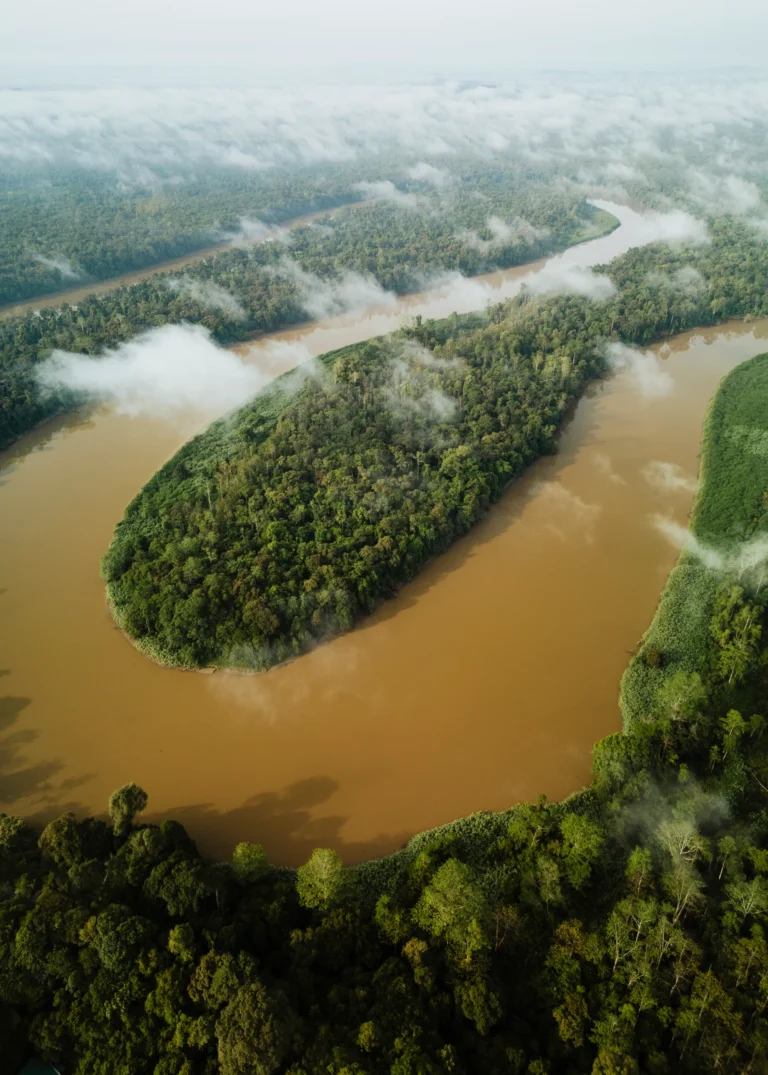
Storm’s stork survives on the lower Kinabatangan because a corridor of riverbank forest runs along the water, and because oxbow lakes and side-channels give it quiet fishing away from the main river. That corridor is what the Lower Kinabatangan Wildlife Sanctuary protects, and what riverfront landowners along the river, ourselves included across our 30 acres, are trying to hold and reconnect.
Every stork you see here is standing on habitat that had to be kept. That is worth holding in your head at the same time as enjoying the view.
Realistic expectations
We do not promise it, and neither should anyone. It is a genuinely scarce bird and a three-night stay is the honest minimum for a fair chance. Book a private Kinabatangan river safari with a specialist bird guide to maximise your chances and bring or rent binoculars!
The full lodge checklist — 175 or more species, compiled by visiting birders — is on our birdwatching page. Our birding guide to the Kinabatangan covers how the cruises, trails and tower fit together, and the package pages show which stays give you the most mornings on the water.