Almost everyone who stays with us on the Kinabatangan passes through Sepilok on the way, and almost everyone arrives with the same three questions: what time is the feeding, how much does it cost, and will I actually see an orang-utan. Here are honest answers, written by people who send guests there several times a week.
What Sepilok actually is
The Sepilok Orangutan Rehabilitation Centre was established in 1964 and was the first place in the world set up specifically to rehabilitate orphaned and rescued orang-utans and return them to the wild. It sits about 25km west of Sandakan, inside roughly 43 square kilometres of protected lowland rainforest.
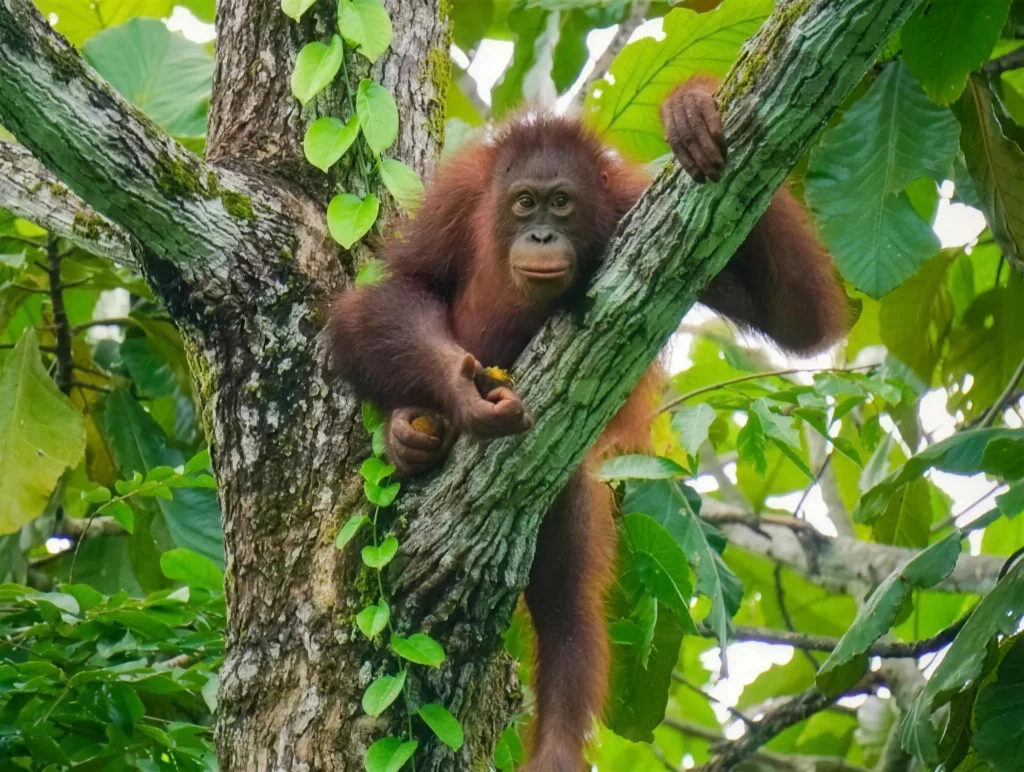
Sepilok is not a zoo and it is not fenced. Around sixty orang-utans live semi-wild inside the reserve. They are free to roam, and the ones that have been out in the forest longest have the least reason to come to a platform for a bucket of bananas. The better the rehabilitation programme works, the fewer animals turn up.
Feeding times, opening hours and what to expect
There are two supplementary feedings a day, at 10am and 3pm. The centre opens at 9am, and the standard published hours are 9am–12pm and 2pm–4pm, with a shorter Friday morning session that closes around 11am for prayers. Times can shift, so it is worth confirming on the day.
Our advice, based on what our guests report back:
- Arrive when the gates open, not when the feeding starts. The hour between 9am and 10am is the quietest and the best of the visit. You can walk the boardwalks through mature dipterocarp forest before the platform crowd builds.
- Go to the outdoor nursery first. This is where younger orang-utans practise climbing and rope work before they graduate deeper into the forest. Sightings here are far more reliable than at the main platform, and it is where most people get their photographs.
- Treat the platform as a bonus. On a good morning you may see several animals come in along the ropes. On a quiet morning you may see macaques eat the bananas and no orang-utan at all. Both happen.
- The 10am session is usually better than the 3pm one — cooler, better light, and animals more active — but the 3pm feeding is noticeably less busy.
Fees
Entry is charged separately for Malaysians and non-Malaysians. At the time of writing the published rates are RM30 for a non-Malaysian adult and RM15 for a non-Malaysian child, and RM5 and RM2 respectively for Malaysians. There is also a camera fee payable at the gate.
Bring cash. Card facilities at the counter are not something to rely on, and the camera fee in particular is a cash transaction. If you are visiting the Borneo Sun Bear Conservation Centre next door, that is a separate ticket, and the Rainforest Discovery Centre is a third.
Fees are set by the centre and do change. If entry is included in your tour — it is in our 3D2N Sepilok & Kinabatangan river safari — check what “included” covers, because camera fees (RM10 per camera) are commonly excluded.
The two neighbours worth adding
Borneo Sun Bear Conservation Centre
Founded in 2008 by Dr Wong Siew Te, this is a refuge for rescued sun bears — the world’s smallest bear species, and one most visitors have never heard of before they arrive. It is immediately next door, takes about 45 minutes, and is the single best-value add-on at Sepilok. Viewing is from raised platforms over a forest enclosure, so bring the binoculars if you have them.
Sepilok Rainforest Discovery Centre
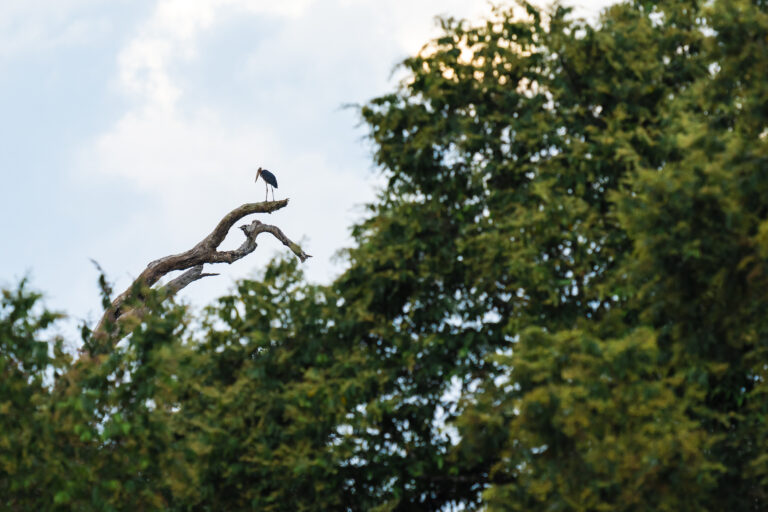
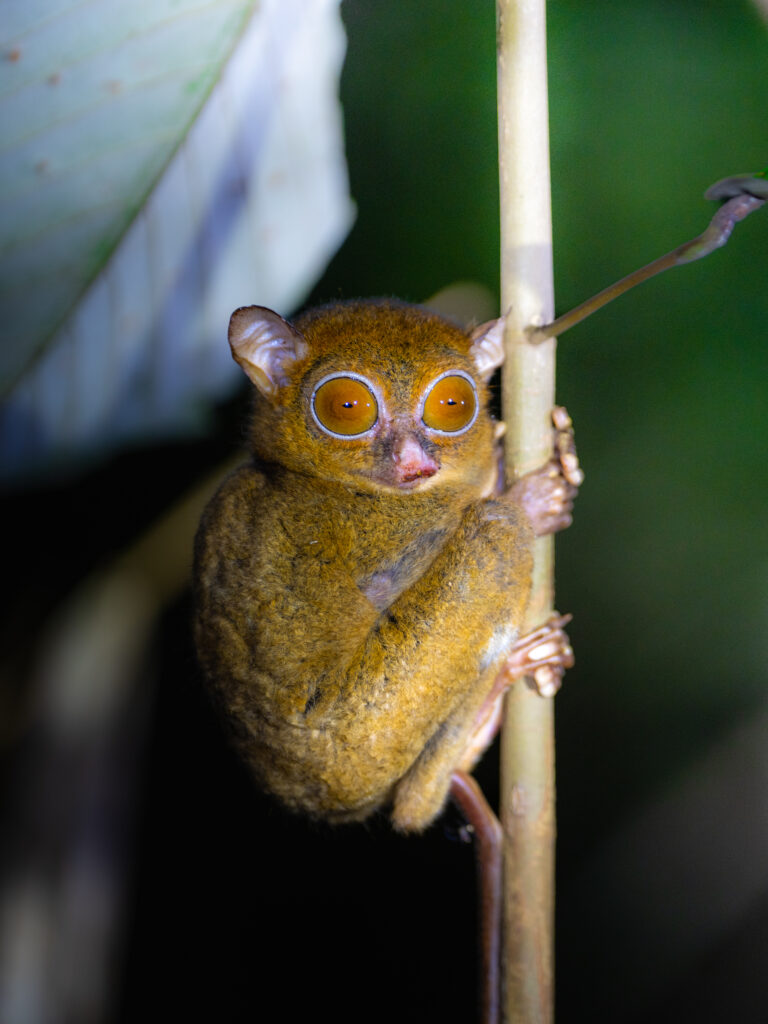
The RDC has Sabah’s longest canopy skywalk at 620 metres, plus a network of trails and towers. For birders it is one of the most productive accessible sites in Sabah. It rewards an early start far more than a mid-afternoon visit. Don’t skip the night walk, it can produce excellent sightings including tarsiers, vipers, colugo and more
How long do you need, and how does it fit a Kinabatangan trip?
Sepilok is a half-day, not a destination. The orang-utan centre alone takes about two hours including the nursery and the boardwalks. Add the sun bear centre and you are at three to three and a half hours. Add the RDC and you have filled a day.
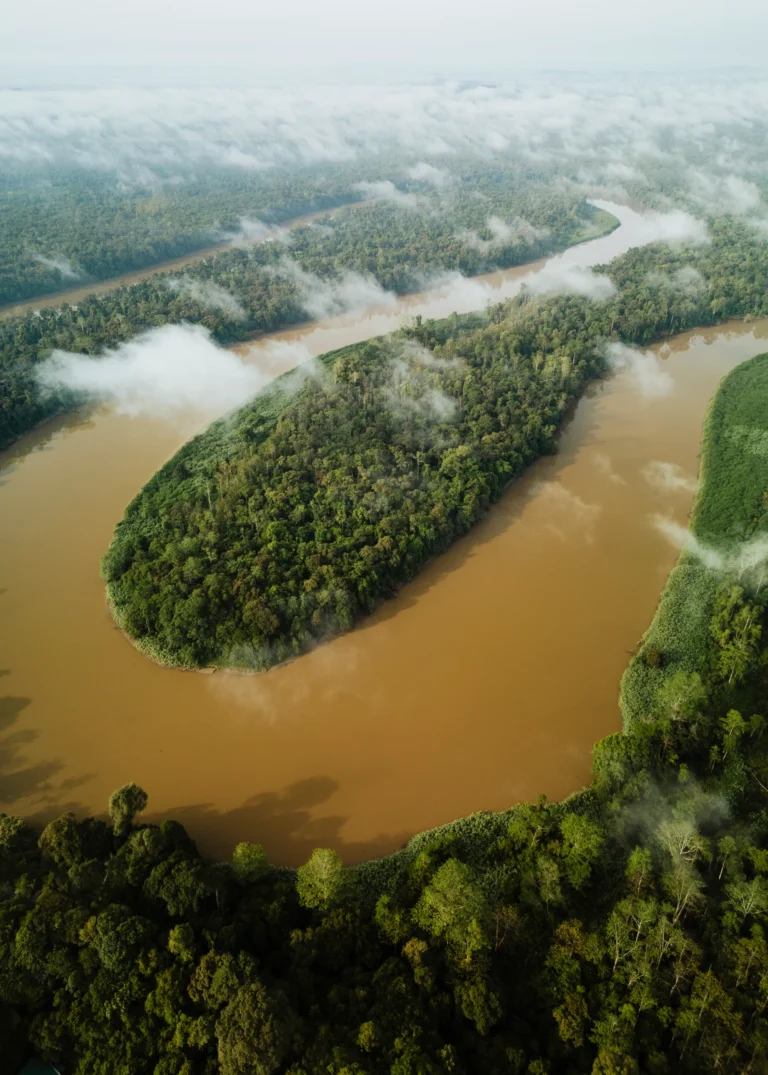
The way it usually works for our guests: fly into Sandakan the night before or first thing in the morning, do the sanctuaries between about 9am and midday, have lunch, then travel overland to the river and be on your first cruise by late afternoon. Bilit is roughly two hours from Sepilok, so the whole thing fits comfortably into one day without rushing.
Sepilok versus seeing orang-utans in the wild
At Sepilok you get frequent sightings of an orang-utan at close range, in a rehabilitation setting, alongside forty other people. On the Kinabatangan you get an uncertain sighting of a genuinely wild orang-utan, usually high in a fruiting tree, from a boat. Neither is better. They are different experiences and most people find they want both — which is exactly why the standard Sabah itinerary strings them together.
If you only have time for one and you want a guaranteed photograph, go to Sepilok. If what you actually want is the feeling of finding an animal rather than visiting one, the river is the answer. We write more about what lives along it in our guide to Borneo’s Big Five.
Practical notes
- Do not touch the orang-utans, even if one comes down onto the boardwalk. They share around 96% of our DNA and are vulnerable to human diseases. Keep your distance and let staff manage the animal.
- Lockers are provided — bags are not allowed on the boardwalk, because the animals will help themselves.
- No food, drink or insect repellent applied on site. Apply repellent before you arrive.
- Wear covered shoes. The boardwalks are wooden and can be slick after rain.
- It rains. Sepilok is lowland rainforest in the wettest state in Malaysia. A light rain jacket is a better investment than an umbrella.
Is it worth it?
Yes, with the caveat that expectations set by other people’s photographs will do you no favours. Sepilok is a working rehabilitation centre that happens to admit visitors, not an attraction built around them. Arrive early, go to the nursery, keep the platform as a bonus, and it is one of the better couple of hours you will spend in Sabah.
If you are working out how the sanctuaries, the river and the coast fit together, our guide to getting to the Kinabatangan covers the routes and transfer times, and you are welcome to ask us directly — we will tell you honestly if a different order works better for your dates.