If you are planning a wildlife trip to Sabah, you will keep running into the same four names: the Kinabatangan river, Danum Valley, Tabin Wildlife Reserve and Deramakot Forest Reserve. They all offer great wildlife spotting opportunities but how do they differ and which one is right for you?
The short version
- Kinabatangan river — the highest chance of seeing a lot of animals, from a boat, for the least money and effort. Secondary forest along a river corridor. Best for first-time visitors, families and anyone short on time or money.
- Danum Valley — primary, never-logged rainforest. Fewer sightings, but wilder ones, on foot. Best for people who care more about the forest itself than about a species tick-list, and who have the budget.
- Tabin — a large wildlife reserve with a mud volcano, quieter than either. Best as a second or third stop, or for people who want trails and 4WD safaris without Danum’s price tag.
- Deramakot Forest Reserve – Lesser known but with an impressive species list, including all of Borneo’s wild cats. Expect simple accommodation and many hours in the back of a 4WD vehicle scanning the trees.
Getting there
Availability may dictate your itinerary so before you book any flights or set your heart on a specific itinerary, reach out to a local tour operator such as River Junkie to check if your dates are possible.
- Kinabatangan: Fly from Kota Kinabalu or Kuala Lumpur to Sandakan, then roughly a 2 to 2.5-hour drive to the river. You can land in the morning and be on a cruise the same afternoon.
- Deramakot: Also accessed via flight to Sandakan. Expect a 2.5 hour drive to Telupid followed by a 2.5 hour drive on rough plantation roads.
- Danum Valley: a 1-hour flight from Kota Kinabalu to Lahad Datu, then about 2.5 hours of driving, much of it on logging road, to the conservation area. Access is controlled and you cannot simply turn up.
- Tabin: the same flight to Lahad Datu, then around an hour and a quarter by road. The easiest of the two Lahad Datu options to reach.
What the forest is actually like
This is the difference that matters most and the one that gets glossed over.
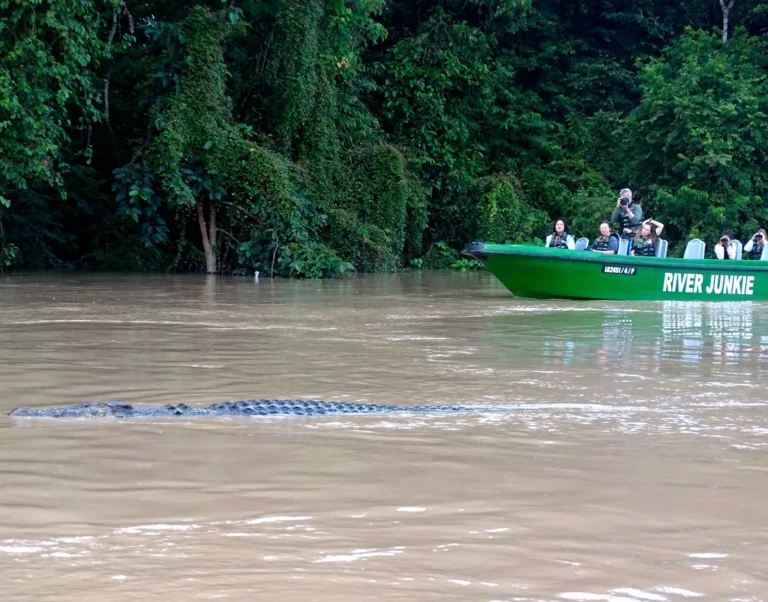
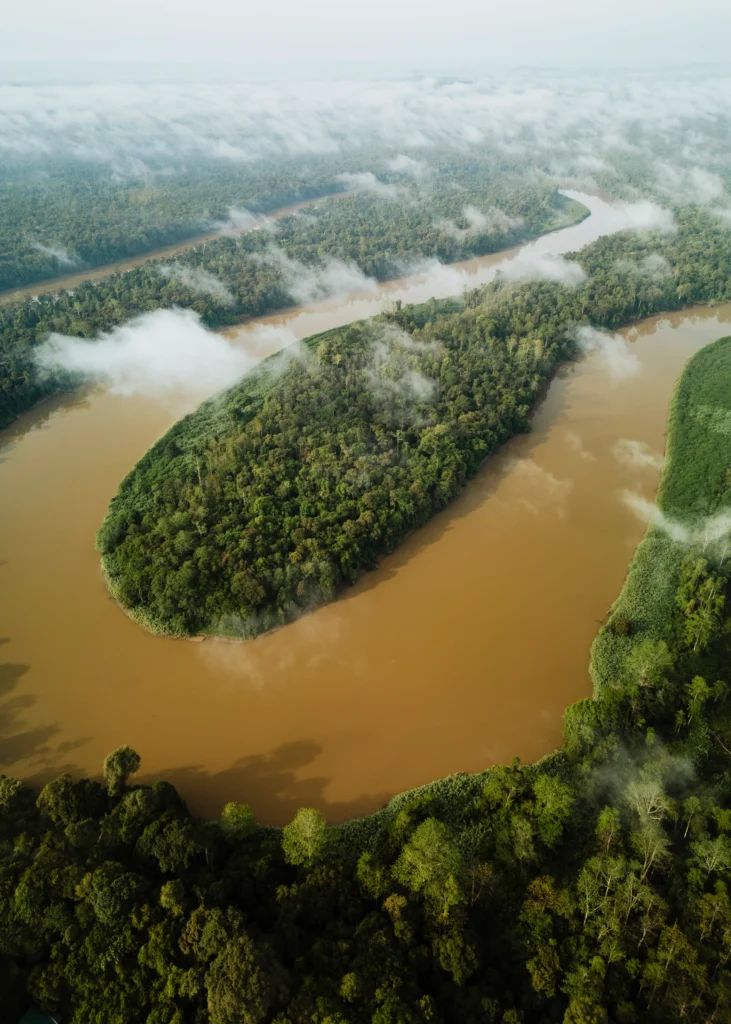
The lower Kinabatangan is a corridor. The forest along the banks is mostly secondary, animals are concentrated into a narrow strip of habitat along the water, and you drift past them in a boat at their eye level. It is honest to say that the density of sightings here is partly a symptom of habitat loss. It is also true that it makes the Kinabatangan one of the most reliable places in Southeast Asia to see wild primates.
Danum Valley is the opposite. It is a large block of primary lowland dipterocarp forest that was never logged, with trees seventy metres tall. The animals are there, but they are spread through an enormous intact system and you are on foot, at ground level, looking up. You can walk for three hours and see almost nothing, then have an encounter you will describe for years.
Tabin sits between the two — a big reserve, a mix of regenerating and older forest, with night drives and trails, and an active mud volcano that draws animals in to use the mineral lick.
Deramakot Forest Reserve – A huge mixed-dipterocarp forest where sustainable logging is still permitted. Wildlife thrives in the reserve but if the sight of a logging truck may be too much, skip Deramakot and focus on Danum Valley, the only true pristine rainforest in this list.
What you are likely to see
Nobody can promise sightings anywhere, and any operator that does is telling you something they cannot know. What we can compare is what each place is known for.
Kinabatangan
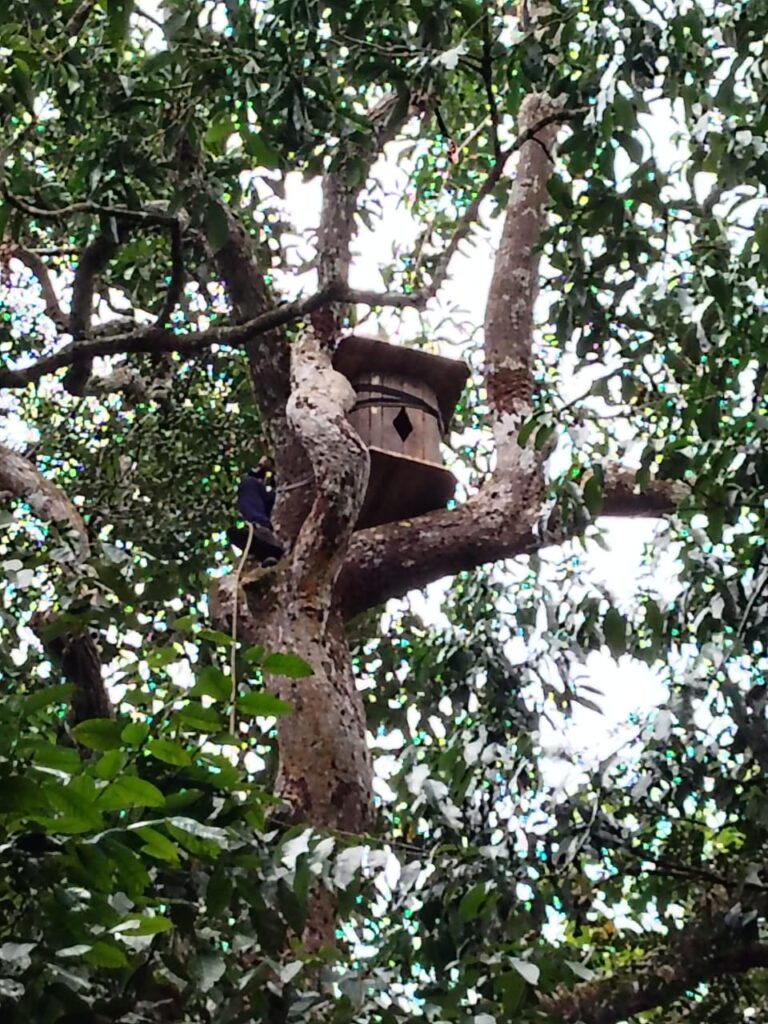
Proboscis monkeys on nearly every cruise. All ten of Sabah’s primate species live along the river, including wild orang-utans and gibbons. Bornean pygmy elephants move through in herds, seasonally and unpredictably. All eight Bornean hornbill species occur here. Estuarine crocodiles on the banks. Around 300 recorded bird species. Night walks turn up civets, slow loris, tarsiers, sleeping kingfishers and a great many frogs.
Danum Valley
Orang-utans in genuinely wild conditions, gibbons heard more often than seen, red leaf monkeys, sambar and mouse deer, and the outside chance of the animals that make Danum famous among naturalists — clouded leopard, marbled cat, banteng. Exceptional birding, including species that do not occur in secondary forest.
Tabin
Pygmy elephants, civets, orangutans, gibbons and a solid night-drive list. Great birding. The mud volcano is the set-piece.
Cost and effort
Broadly: Kinabatangan is the cheapest, Tabin, Deramakot & Danum Valley Field Centre sit in the middle. The 5 star Borneo Rainforest Lodge in Danum Valley is significantly the most expensive but offers the best accommodation and service of the list.
Effort follows the same order. A Kinabatangan stay asks very little of you physically: the cruises are seated, and the walks are optional. Danum is a walking destination, in heat and humidity, on uneven ground, and you should be honest with yourself about that before booking. Tabin is somewhere in between, with more driving and less walking than Danum.
How to choose
Pick the Kinabatangan if you have three or four days, you want to see as many animals as possible, you are travelling with children or older parents, or this is your first trip to Borneo. It also combines most easily with Sepilok and Turtle Island, which is why it anchors most Sabah itineraries.
Pick Danum Valley if you have been to a rainforest before and found the wildlife-watching-from-a-boat format unsatisfying, if primary forest is the thing you actually want to stand in, and if the budget allows. Go for three nights minimum — two is not enough to justify the travel.
Pick Tabin if you want trails and night drives without Danum’s cost, or if you are already going to Lahad Datu and want a second reserve.
Pick Deramakot if you are already going to the Kinabatangan river and want a second location with a focus on four-wheel drive activities and surprising encounters. Stay 3 nights if you can, night drives are when most of the action happens.
Do more than one if you can. The most satisfying Sabah itineraries we see are not either/or. A common shape is Sepilok, then three nights on the Kinabatangan, then Deramakot, Danum or Tabin — sanctuary, then river, then deep forest, in ascending order of wildness. Each one makes the next feel different.
Start planning your trip
How much time do you actually have? Sabah punishes tight itineraries. Each move between these places costs the better part of a day, and a two-night stay somewhere effectively gives you one full day of activities. If you have three or four days, do one place properly. 5 days is the minimum to properly combine two locations –
- 3 days for wildlife – Sepilok & Kinabatangan river
- 5 days for wildlife – Sepilok, Kinabatangan river and Danum, Tabin or Deramakot
- 8 days for wildlife – Sepilok, Kinabatangan river, Tabin or Deramakot and finish with Danum Valley
Plan well-ahead. We cannot emphasise this enough. These locations book up months in advance, often six-months or more in high season.
The team at River Junkie Tours plans dozens of trips every week and will combine logistics with your wish-list to produce the perfect itinerary for you. Email info@river-junkie.com to start planning your trip today. You can see what a stay on the river involves in our package pages, or read more about the river itself in our guide to the Kinabatangan.