Around 300 bird species have been recorded along the lower Kinabatangan. Our own 30 acres at Hornbill Lodge has a checklist of over 175, compiled over time by visiting birders.
Where the birds actually are
The Kinabatangan is a river-edge system, and most of the birding is done from a boat.
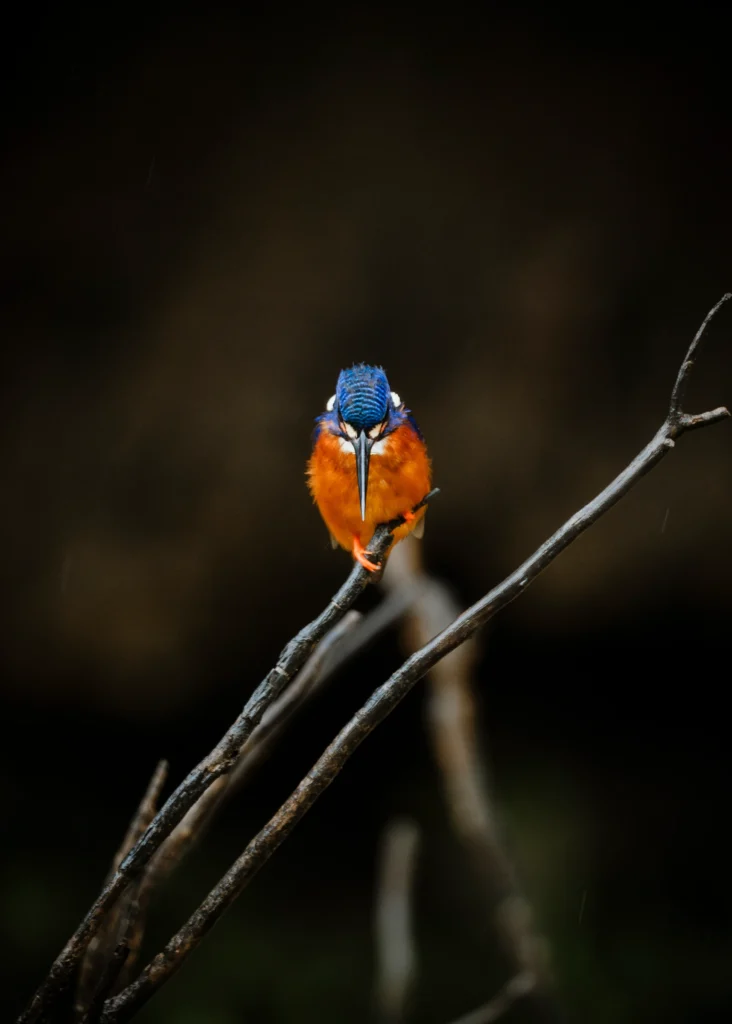
The dawn cruise is the productive one. Hornbills commute between roost and feeding trees in the first hour of light and you see them crossing open river. Kingfishers — seven species on our list — sit on low perches over the water. Oriental darters dry their wings on snags. Raptors work the banks: crested serpent-eagle and Brahminy kite almost daily, both fish-eagles regularly, Wallace’s hawk-eagle and Jerdon’s baza for the patient.
The afternoon cruise gives you the herons and egrets moving to roost, bee-eaters hawking over the water, and at last light the large-tailed nightjar and, with luck, a buffy fish-owl on a branch over the river.
The trails and the tower are for the forest-interior birds the boat cannot reach — pittas, trogons, broadbills, babblers, woodpeckers, the ground-cuckoo. Our three-storey observation tower puts you level with the canopy, which is where the flowerpeckers, sunbirds and leafbirds spend their day.
Night walks are underrated for birds. Kingfishers and bee-eaters roost low and sit tight, so you get views at two metres that you would never get by day.
The birds people travel here for
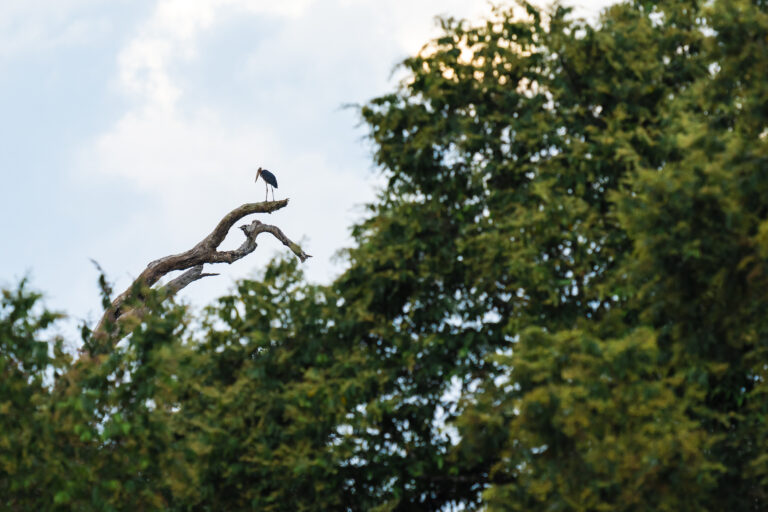
- Storm’s stork — one of the rarest storks on earth, and the lower Kinabatangan is one of its strongholds. On our list, and the single most-requested bird.
- Bornean ground-cuckoo — Bornean endemic, secretive, heard far more than seen. On the list, but rarely seen.
- White-fronted falconet — an endemic falcon the size of a sparrow, usually on a dead snag at the forest edge.
- Hornbills — seven of Borneo’s eight species are on the lodge checklist: rhinoceros, oriental pied, black, bushy-crested, wrinkled, white-crowned and wreathed. Helmeted occurs on the river and has been heard from the lodge but is not yet on the list.
- Black-crowned pitta — Bornean endemic, on the trails.
- Bat hawk — hunts the swiftlet and bat exodus at dusk; regularly seen at Gomantong.
- Great slaty woodpecker — the largest woodpecker in Asia, in noisy family groups.
Timing your trip
Residents are here all year, and that includes almost everything above. Migrants add to the list roughly October to March: Japanese sparrowhawk, grey-streaked and Asian brown flycatchers, the sandpipers, whiskered tern and Chinese egret. There is no closed season, and no month in which the hornbills leave.
What matters more than the month is the number of mornings. Two nights gives you two dawn cruises. Three gives you three, plus a full middle day for the trails and tower. If birds are the reason you are coming, book three nights on a private basis.
Planning your trip
Our regular Kinabatangan river safaris cater to a wide range of interests and run in groups of up to 12 people per boat & guide. A private tour includes your own boat and guide and allows you to focus specifically on your interests. Our in-house guides have an impressive breadth of knowledge that covers commonly spotted birds but for a truly rewarding, in-depth birding trip, ask us about hiring a specialist bird guide.
What to bring
- Binoculars, your own or rented from reception. 8×42 is the right tool for a boat.
- A field guide. Phillipps’ Field Guide to the Birds of Borneo is the standard. Load an offline app as well.
- Something to write on. Sightings come fast on a good morning.
- Long lens if you shoot. Most river birds are 30–50 metres out. 400mm on a crop body is workable.
- Dry bag, hat, repellent. Same as any cruise. Add sunscreen to the mix if you plan to stay out long beyond sunrise.
Recording what you see
The lodge checklist was built by guests. If you add a species, tell reception with the date and where you saw it, and it goes to the compilers. We would rather the list grew than stayed tidy.
The full family-by-family checklist is on our birdwatching page. Our guide to telling Borneo’s eight hornbills apart covers the birds we are named after, and the package pages show how many cruises each stay includes.