Let’s be honest, Turtle Island (officially called Selingan Island) isn’t cheap. So what happens on the island and is it worth it?
Where it is and how you get there
Selingan Island sits about 40km north of Sandakan in the Sulu Sea, inside Turtle Islands Park. Access is a speedboat crossing of roughly an hour, and the boat leaves Sandakan by 10am. There is one departure a day in each direction.
That single daily boat is the reason we tell guests to fly into Sandakan the day before their tour starts. A delayed morning flight does not mean a late arrival; it means missing the island entirely, and the accommodation is non-refundable.
Numbers on the island are capped by Sabah Parks, which is why beds book out months ahead in the peak season and why the place never feels crowded.
The afternoon
You arrive before lunch, check into simple twin-share accommodation — there is only one place to stay, run by the park concession — and then the day is yours. Swim, snorkel, walk the perimeter, sleep. It takes about twenty minutes to walk around the whole island.
The snorkelling equipment rental service on the island closed in 2025 but not to worry, we provide snorkelling gear for you.
Meals are buffet, served in the island’s dining room: lunch 12.30–1.30pm, dinner 7.30–8.30pm. Breakfast the following morning is at 6.30am.
At 5pm the beaches close. Stay off the beaches after this, so that turtles coming ashore at dusk are not disturbed by torchlight and movement. This catches people out — if you want a sunset walk on the beach, take it early.
The turtle hatchery activities
After dinner you wait. There is no schedule, but there are board games to entertain you.
Sabah Parks rangers patrol the beaches through the evening looking for a female that has come ashore and settled into laying. Once she has started, she goes into a kind of trance and will complete the clutch regardless of quiet observers.
When the call comes, you go out in a group with a ranger. You watch her lay, in low red light, at a distance the ranger sets. Green turtles are the usual species here; hawksbills nest in smaller numbers.
Then three things happen in sequence:
- The clutch is collected and moved to the hatchery. Every nest, every night. Left on the beach they would be lost to monitor lizards, birds, crabs and tidal flooding. In the hatchery each clutch is reburied, labelled with the date and the number of eggs, and caged.
- The female is measured and tagged before she returns to the sea, which is how the park has built decades of population data.
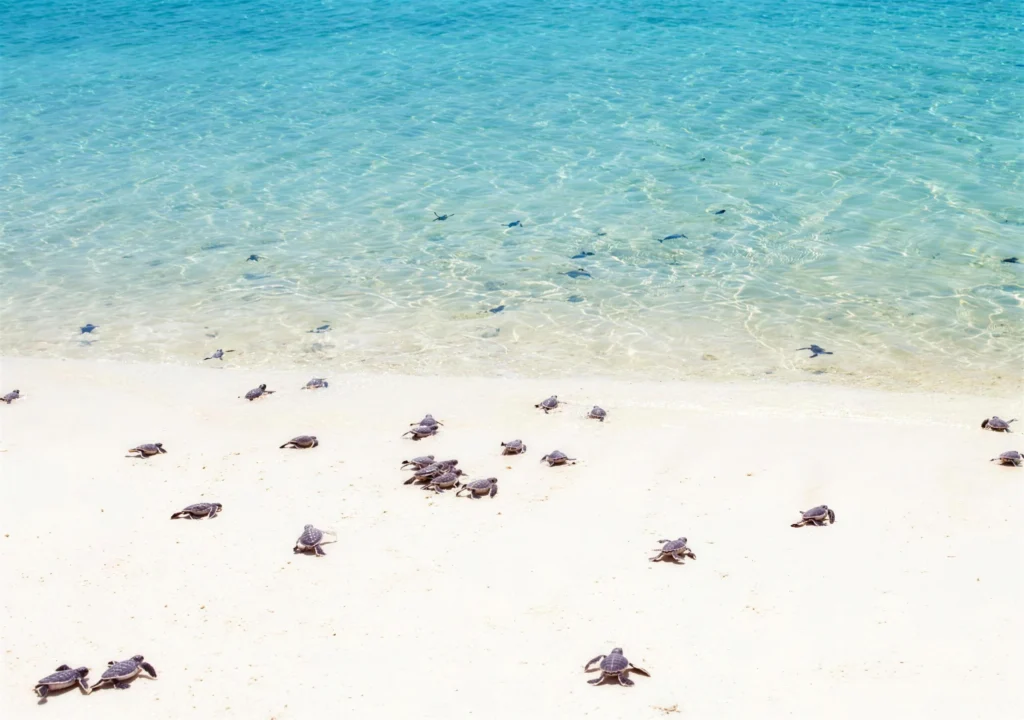
- Hatchlings are released. Clutches laid roughly two months earlier are emerging, and you carry a bucket of them down to the waterline in the dark and watch them go.
The whole thing takes an hour or two, and it can start at 8pm or after midnight. Most nights it happens between 8 – 11pm.
Know before you go
It is worth being clear about a few things, because the photographs circulating online oversell it.
- You will see one turtle lay. Regardless of how many turtles come to shore on the night of your stay, the rangers will only show you one female laying to minimise disturbance.
- Flash photography is not allowed on the beach or at the release.
- The accommodation is simple. Air-conditioned rooms with twin beds and a functional bathroom. It is a national park chalet on a remote island, not a hotel.
- The snorkelling is the not the highlight. The hatchery activities are.
- Room occupancy is strictly capped at 2 adults and 1 child aged 10 or under. Families with older children, or more than one child, need two rooms.
When to go
Turtles come ashore on Selingan every night of the year, so there is no closed season and no month in which you would definitely miss out. Peak nesting runs roughly May to October, when numbers on a single night can be much higher.
The variable that matters more than the month is the sea. Crossings depend on conditions, and the roughest weather typically falls between November and January. On rare occasions boats cannot reach or leave the island. Because the accommodation is fully non-refundable, no refund can be offered in that situation — what we can do is help you reschedule or arrange an alternative. Boats are rarely cancelled but it pays to keep your plans flexible if you are travelling in the rougher months
How it fits with the river
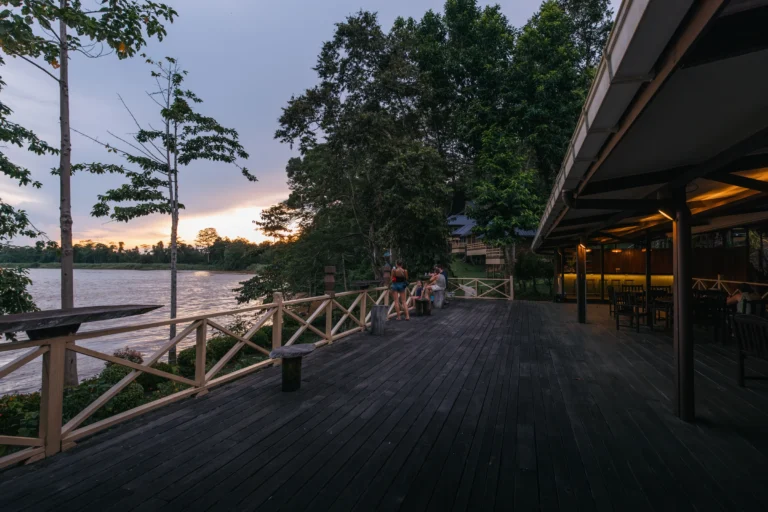
The classic trip is island first, river second with Sepilok in between. Our 4D3N Turtle Island & Kinabatangan river safari does exactly that: night one on Selingan, back to the mainland after breakfast, the Sepilok sanctuaries on the way through, then two nights at Hornbill Lodge.
If you want to do it in reverse and save the beach till last, allow for one extra night in Sandakan between leaving the Kinabatangan river and transferring to Turtle island. If not, you will have to miss the final morning river cruise and rush to Sandakan jetty via a private transfer to make the boat.
Should you do it?
If watching a turtle lay her eggs and hatchlings head to the ocean has always been on your bucket list, Turtle Island is one of the most reliable places in Asia to see this happen. It is also the closest place to Sandakan to sneak in some beach time in what may otherwise be a week of jungles.
If snorkelling with turtles is your priority, consider Lankayan Island or the islands off Semporna instead. The reefs are better and the marine life is more abundant than around Turtle Island.
More detail on the island is on our Turtle Island page, and if you are unsure whether your dates and flights make it workable, send them over and we will tell you straight.