An hour from the lodge, a limestone massif rises out of the forest with two caves in it. Inside are the most valuable birds’ nests in the world. Above the guano floor hang somewhere north of a million bats, and at dusk they all leave at once.
It doesn’t smell good, but it is one of the most memorable things you can do in Sabah!
What Gomantong is
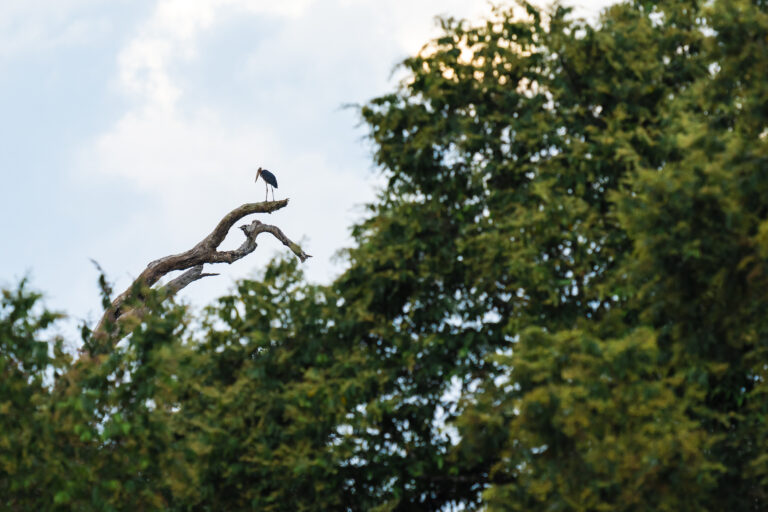
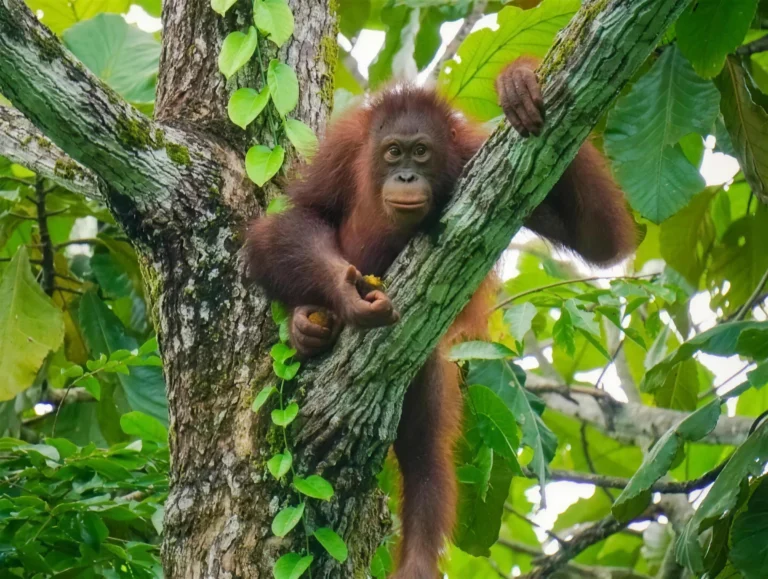
The Gomantong caves sit inside a 32 square kilometer protected forest reserve. Early recognition of the value of edible birds nests led to early protection for the area, benefiting both the inhabitants of the caves and the surrounding forest. Frequent sightings of orang-utans, red-leaf monkeys, bat hawks and hornbills make Gomantong one of the best places to see wildlife in the Kinabatangan region.
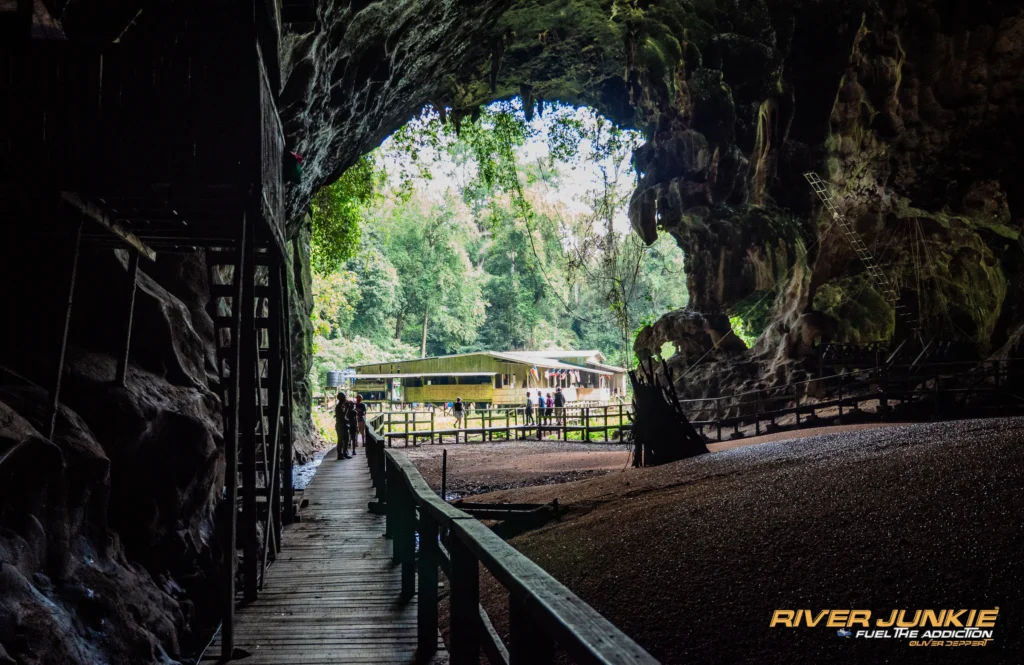
The cave system has two main parts. Simud Hitam, the Black Cave, is the lower and more accessible one, and the only part open to visitors. Simud Putih, the White Cave, sits above it and holds the more valuable white nests; it is not open to the public.
The nests
Edible birds’ nests are built by swiftlets, from their own hardened saliva, on the cave walls and ceiling. They are the raw material for birds’ nest soup, and they are among the most expensive animal products on earth by weight.
Harvesting at Gomantong is centuries old, licensed, and seasonal. Two harvest periods a year, timed around breeding so that birds are not collected from mid-cycle. The collectors climb rattan and bamboo ladders and pole scaffolding, some of it many metres above the cave floor, and you will see that equipment in place whether or not a harvest is running. It is a genuinely dangerous job that has not changed much in a very long time.
Black nests are the cheaper grade, containing more feathers; white nests, from a different swiftlet species, are near-pure saliva and command the extraordinary prices you read about.
The bit nobody warns you about properly
Let us be direct, because the reviews that describe Gomantong as “smelly” are underselling it.
You will smell the cave before you see it — a sharp ammoniac note on the air a few minutes’ walk out. Inside, the floor is guano, metres deep in places, and it is alive. Cockroaches in large numbers, freshwater crabs, centipedes, beetles. Everything on that floor is there to process bat and swiftlet droppings, and collectively they are the reason the cave has not filled to the ceiling.
There is a raised boardwalk through it. Stay on the boardwalk, hold the rail, and look at the ceiling rather than your feet if that is easier. Plenty of guests find it fascinating but a few walk back out after two minutes. Either way, it is a trip you will remember!
The exodus
Late afternoon, the bats start to stir. Somewhere around dusk the trickle becomes a column, and for the better part of an hour a continuous ribbon of bats pours out of the cave mouth and spirals up into the sky.
The spiral is not decoration. Bats leaving a cave mouth in a dense, twisting column are much harder to pick off than bats leaving in a straight line — and there are things waiting. Bat hawks work the exodus, and you will usually see several hunting, sometimes taking a bat mid-air directly overhead. Serpent eagles and other raptors hang around the edges for the same reason.
The bat exodus can be seen from ground level near the car park but if you want to get closer to the action, there is a viewpoint reached by roughly 500 steps. It is a real climb in humidity, and it is optional. Those who brave it will be rewarded with beautiful views over the surrounding forest.
How to actually see it
This is the part most trip plans get wrong, so it is worth being specific.
As a check-out day add-on
A Gomantong caves visit is available as an optional excursion on your departure day. It includes a short boardwalk through the forest reserve, the caves, lunch in Sepilok and the Sepilok Rainforest Discovery Centre. The add-on takes place in the morning and doesn’t include the bat exodus.
As part of a three-night stay
If the bat exodus and time looking for primates is your priority, book the 4D3N Kinabatangan river safari with Gomantong. You will skip the afternoon cruise on your 2nd or 3rd day and head to Gomantong instead. Stay through the afternoon and into sunset then enjoy a complimentary night cruise after dinner back at the lodge.
What to wear and bring
- Covered shoes with grip. The boardwalk is wet and slick in places. Not sandals.
- Long trousers. More comfortable on the walk in and better against insects.
- A torch or head torch. The cave is dim
- Water and repellent.
- A camera you do not mind exposing to humidity. The exodus is at low light against a darkening sky — high ISO, wide aperture, and accept that your eyes will do better than your sensor.
Is it worth doing?
If you are squeamish about insects or strong smells, book a 4D3N package so that you can visit Gomantong in the afternoon, skip the caves and focus on wildlife.
If you can tolerate the caves for twenty minutes, you get to witness a working piece of living heritage and a genuinely strange ecosystem.
Our guide to the caves themselves is on the Gomantong page, and you can ask us about availability on any given date through the contact form.