The honest headline first: there is no month in which the wildlife leaves the Kinabatangan. The river runs 560km through Sabah and drains almost a quarter of the state, and the forest along its lower reaches holds ten primate species, all eight of Borneo’s hornbills and around 300 recorded bird species. That does not switch off in any season. What changes through the year is how busy the river is, what is happening at the places you might combine with a stay here, and — in ways nobody can put a date on — where the animals happen to be on the morning you go looking.
What our guides see in any month
Some sightings are close to a given, whatever the month on your ticket:
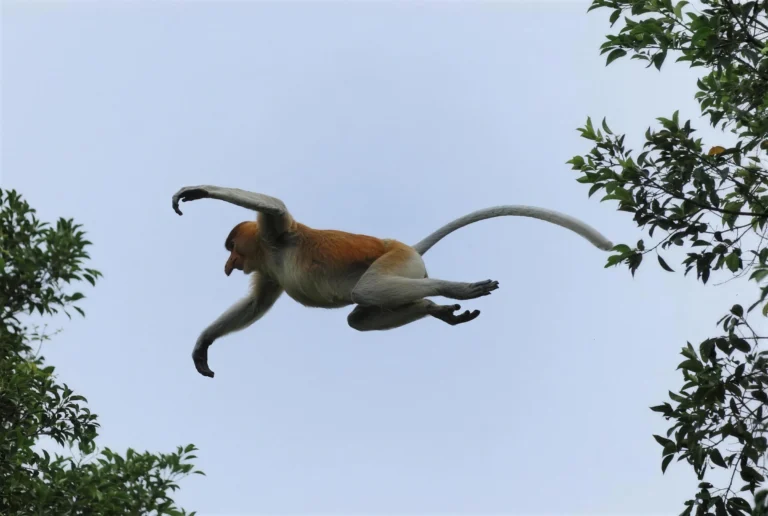
- Proboscis monkeys. The easiest of Borneo’s Big Five to find here, and they make an appearance on nearly every river cruise. Late afternoon is best, when troops gather at the water’s edge to pick a sleeping tree.
- Hornbills. All eight Bornean species occur along the river. Oriental pied and rhinoceros hornbills are the ones you are most likely to see and hear, sometimes from your own balcony.
- Long-tailed and pig-tailed macaques. The Kinabatangan is one of only two places on earth where ten primate species live side by side. These two are seen daily.
- Langurs and gibbons. Make a regular appearance on cruises and sometimes on our jungle trails too.
- Estuarine crocodiles. Mostly nocturnal, which is why the night cruise is the best way to look for them. In daylight they haul out on the banks when the water level lets them.
- Nocturnal life on foot. Every night after dinner our guides walk the trails behind the lodge — tarsiers, slow lorises, civets, sleeping kingfishers, stick insects and, for the very lucky few, a leopard cat or a binturong.
- Orangutans. The forest around the lodge holds mature fruit trees that orang-utans return to through the year, and guests occasionally wake to find a nest within sight of a chalet balcony. If trees are fruiting, chances of seeing an orang-utan during your stay are high, outside of fruiting season they are 50/50. The main fruiting season is June to September with a secondary fruiting season from November to January.
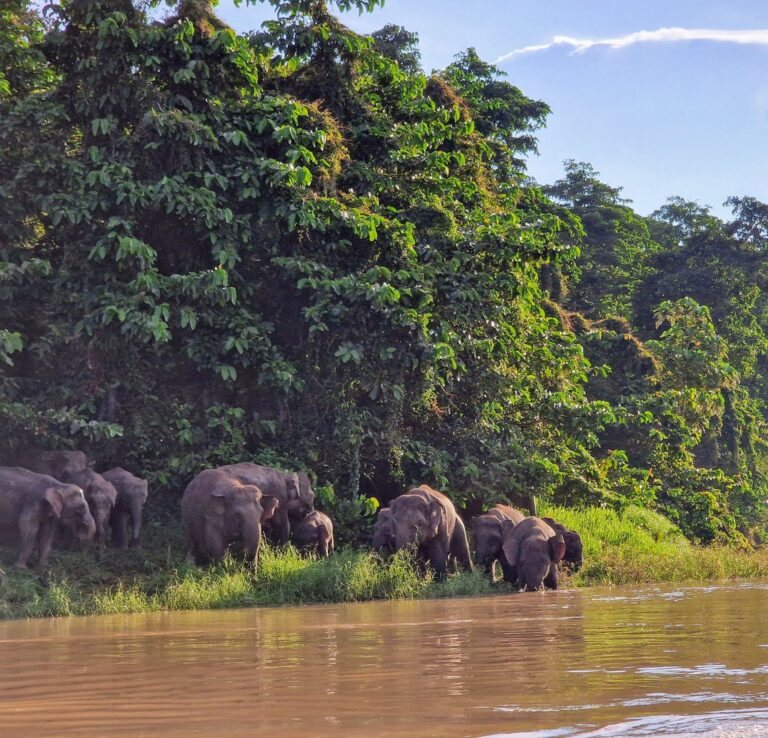
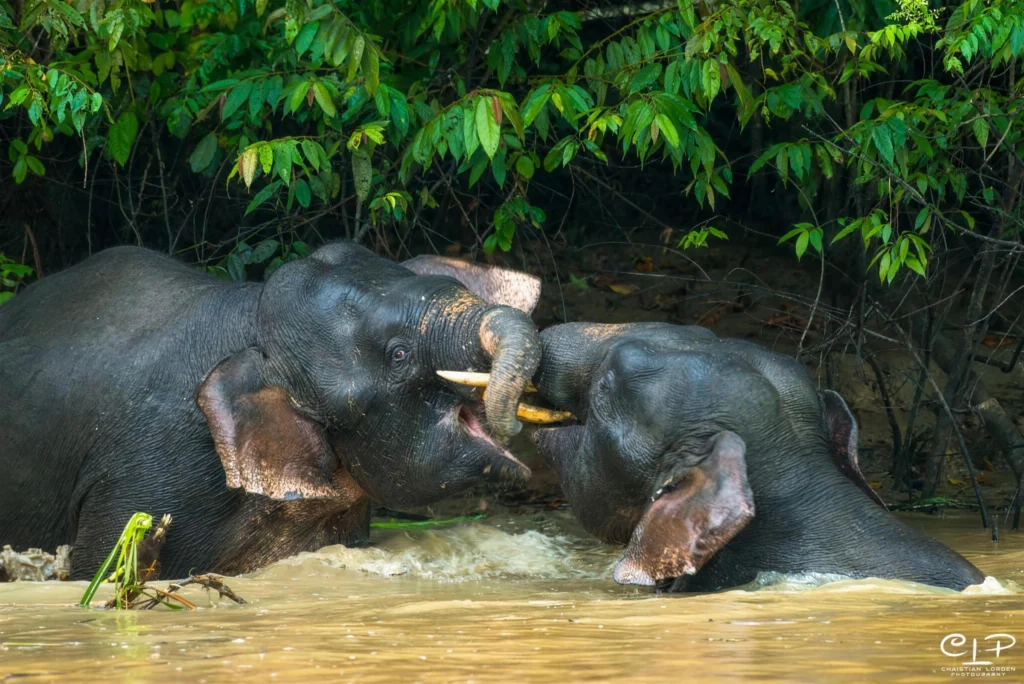
- Elephant herds range widely: they may be on the banks for a few weeks, disappear inland, and reappear a few weeks later. That cycle does not follow the calendar.
What genuinely does change through the year
How busy the river is
This one we can be precise about, because it is in our own rate sheet. April, July, August and September are our peak months Busier months mean more boats on the water in the late afternoon and rooms that sell out earlier. Peak months are dictated more by school holidays than by the “best time to visit”. If you would rather have the river quieter, the months either side of those peaks are worth a look
Turtle nesting at Selingan
If you are adding Turtle Island to your trip, this is the one part of the itinerary with a real season. Green and hawksbill turtles come ashore on Selingan year-round, but the main laying season runs from May to October, when twenty or more turtles a night may nest. Eggs incubate for roughly two months before the hatchlings are released. Outside those months it is still rare not to see a turtle lay — you may simply wait longer for the rangers to find one. Between November and January there is a higher risk of weather disrupting the speedboat transfer from Sandakan, so build in a buffer day if you travel then.
The Gomantong caves
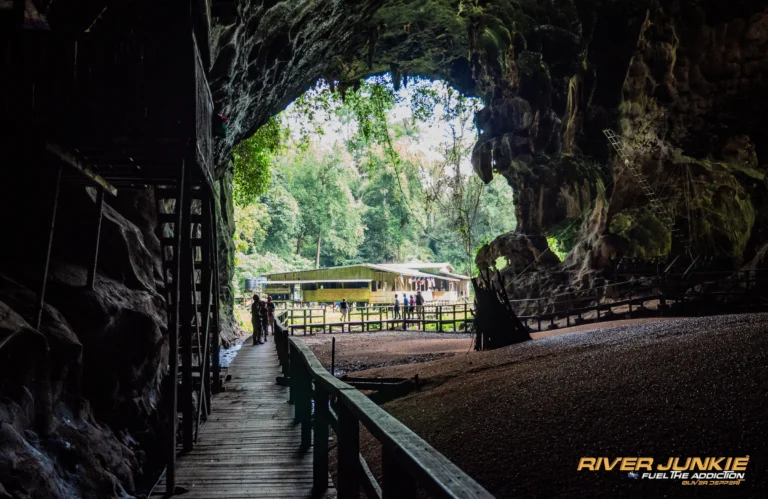
The bat exodus at dusk — well over a million bats pouring out of the hillside — happens through the year. The edible birds’ nest harvest, with its ladders of improbable length, is seasonal: February to April and July to September.
How to improve your odds in any month
Time on the water beats timing of the year. Two nights gives you roughly four cruises; three nights gives you six, plus more walks. Do the 5.30am dawn cruise as well as the afternoon one — the river behaves differently at each. Add a night cruise for crocodiles and owls (bookable at reception, weather dependent, so book it early in your stay rather than saving it for the last night). Stop at our three-storey observation tower during a jungle walk. To search beyond our standard cruise, which runs no further than Sukau village downriver or Bukit Batangan upriver, prebook the extended cruise on our long-range boat. And if orang-utans are the priority, pair the Kinabatangan with Sepilok, Danum Valley or Tabin.
Practical notes before you book
Hornbill Lodge sits on a hillside in Bilit village, about two hours by road from Sandakan airport. Because of that hillside, there is no step-free access to the rooms: the furthest chalets are around 85 steps up, the closest 10 to 20. Tell us when you book if you need to be near reception and we will do our best. River cruises are not physically demanding, but jungle and night walks mean an hour or more on uneven ground, and the Gomantong viewpoint involves 500 steps. Rubber boots are provided free, in adult and child sizes. We do not sell bottled water — bring a refillable bottle.
So when should you come?
If you want the river at its quietest, look at the months outside April and July to September. If your dates are already fixed, do not lose sleep over the month — book the extra night instead. On this river, the people who see the most are almost always the ones who stayed longest.